
More Than a Phone Call: How Michigan’s Poison Center Protects Our Communities

By Kellie Fehrenbaker
Every day, thousands of Americans are exposed to prescription and over-the-counter medications, illicit drugs, household products, and environmental toxins, often with potentially life-threatening consequences. In these critical moments, poison centers serve as trusted, immediate sources of expert health guidance. While many people associate poison centers with emergency phone calls, their role extends far beyond crisis response to broader public health protection.
The Michigan Poison & Drug Information Center (MiPDC), at the Wayne State University School of Medicine, serves civilians, law enforcement, first responders, and healthcare professionals throughout Michigan. Through expert consultation with poison specialists and toxicologists, community outreach, and collaboration with healthcare and public health partners, the MiPDC helps reduce the impact of poisonings and toxic exposures while supporting long-term poison prevention strategies (Michigan Poison & Drug Information Center, 2020).
The work of the MiPDC is guided by its mission: to prevent and respond to hazards posed by poisons and drugs with readily available specialty care and expertise for the health of Michigan residents. This mission reflects a commitment to both rapid response and prevention. Specialists in Poison Information (SPI) are nurses, pharmacists, or physicians who provide real-time, evidence-based guidance to help individuals safely manage exposures and determine when medical care is necessary. This translates to optimizing care, reducing unnecessary healthcare expenditures, and improving patient health outcomes.
The MiPDC serves as a vital resource for both the public and healthcare professionals. The MiPDC SPIs are available 24/7 to provide exposure and subsequent treatment guidance and recommendations. Their expertise supports clinical decision-making in both emergency and non-emergency situations while also providing families, caregivers, and clinicians with immediate evidence-based information to ensure appropriate care. Further, board-certified toxicologists are available around the clock for on-call consultation services for high acuity and severe poisoning cases.
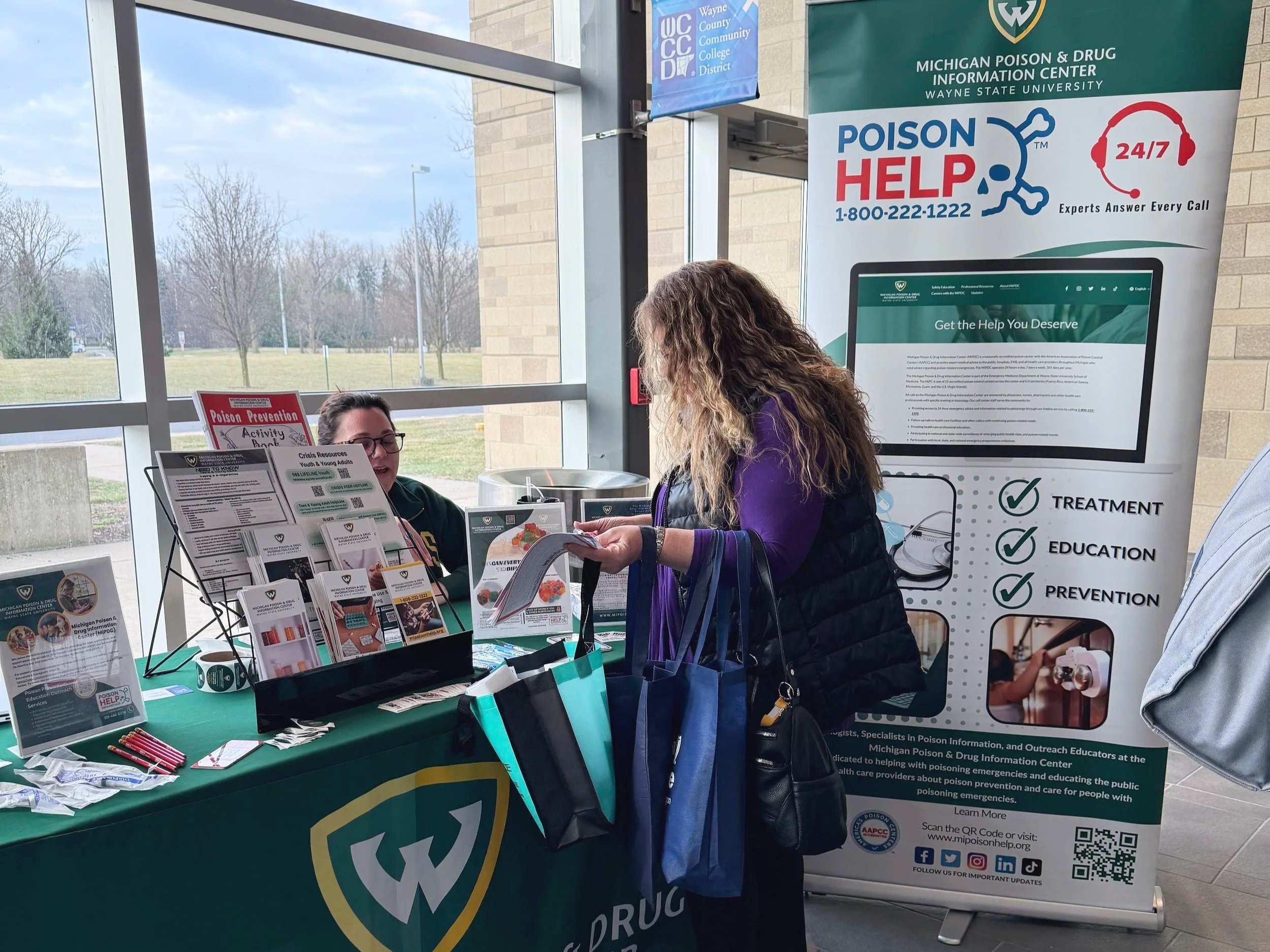
In addition to emergency response, the MiPDC emphasizes education, outreach, and collaboration. The center provides healthcare professionals and community members across Michigan with education services that promote safe medication use, proper storage of hazardous substances, and poison prevention strategies. Partnerships with public health agencies further strengthen prevention efforts and improve responses to emerging poison-related threats.
The MiPDC also contributes to public health surveillance. Case call data helps identify overdose trends that inform mitigation and prevention efforts aimed at reducing poison-related injuries. This demonstrates how poison centers contribute to both individual patient care and harm reduction to protect public health.
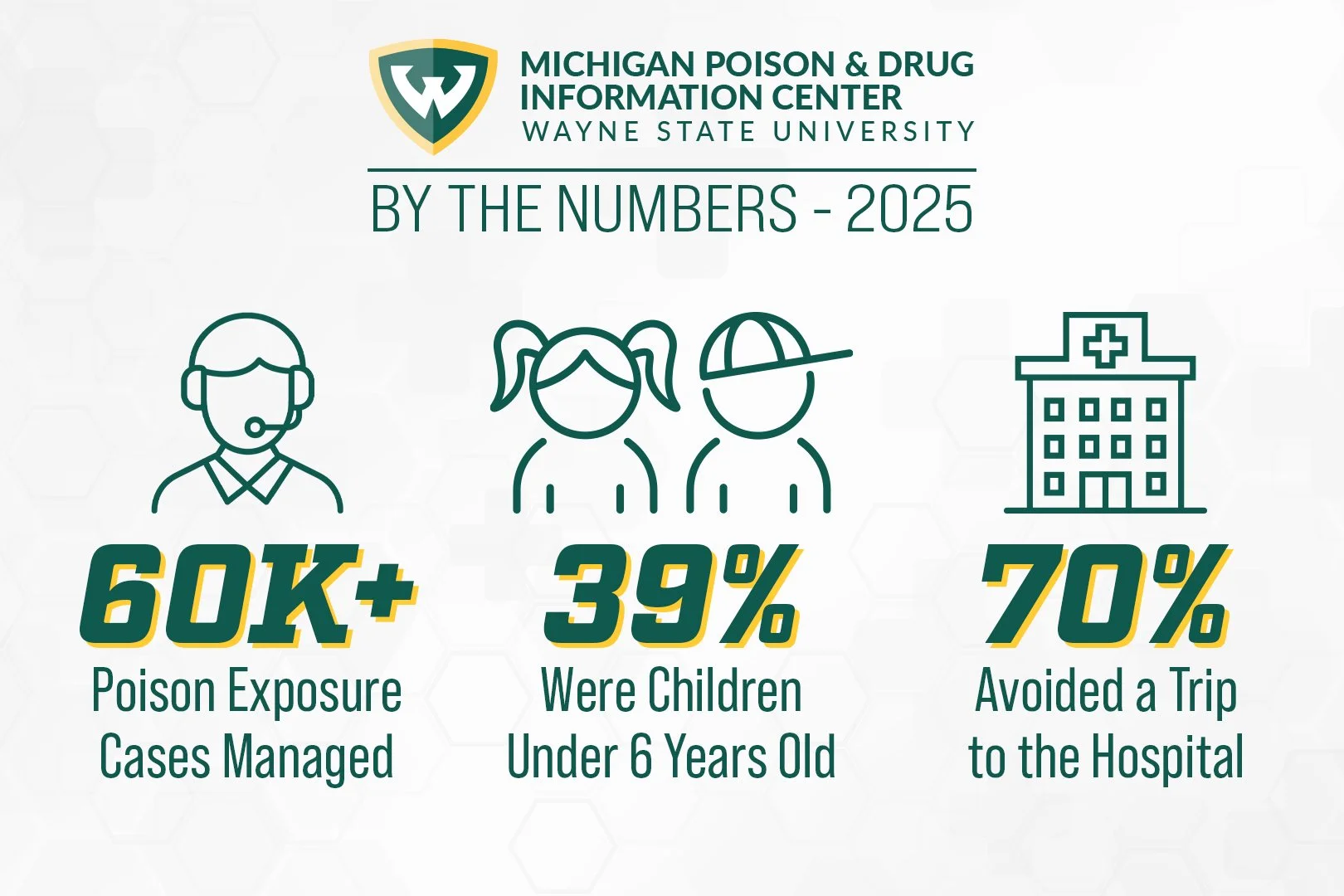
The center’s impact is evident in the number of cases managed each year. In 2025, the MiPDC managed over 60,000 exposure cases, 39% of which involved children under the age of six years. Additionally, approximately 70% of cases were safely managed at home without referral to a healthcare facility, highlighting the center’s role in reducing unnecessary emergency department visits and healthcare resource expenditures while optimizing patient health and safety.
As a public health student completing my practicum with the MiPDC, I have gained a deeper understanding of the essential role poison centers play in protecting our communities. The MiPDC is more than a resource for emergencies; it is a cornerstone of public health in Michigan, bridging clinical expertise and prevention to save lives, reduce harm, and build healthier communities.
References:
Michigan Poison & Drug Information Center | Get Expert Guidance. (2026, February 17). Michigan Poison & Drug Information Center. https://www.poison.med.wayne.edu
Mission & Vision. (2020, updated 2025). Michigan Poison & Drug Information Center. Retrieved February 23, 2026, from https://www.poison.med.wayne.edu/mission-vision
